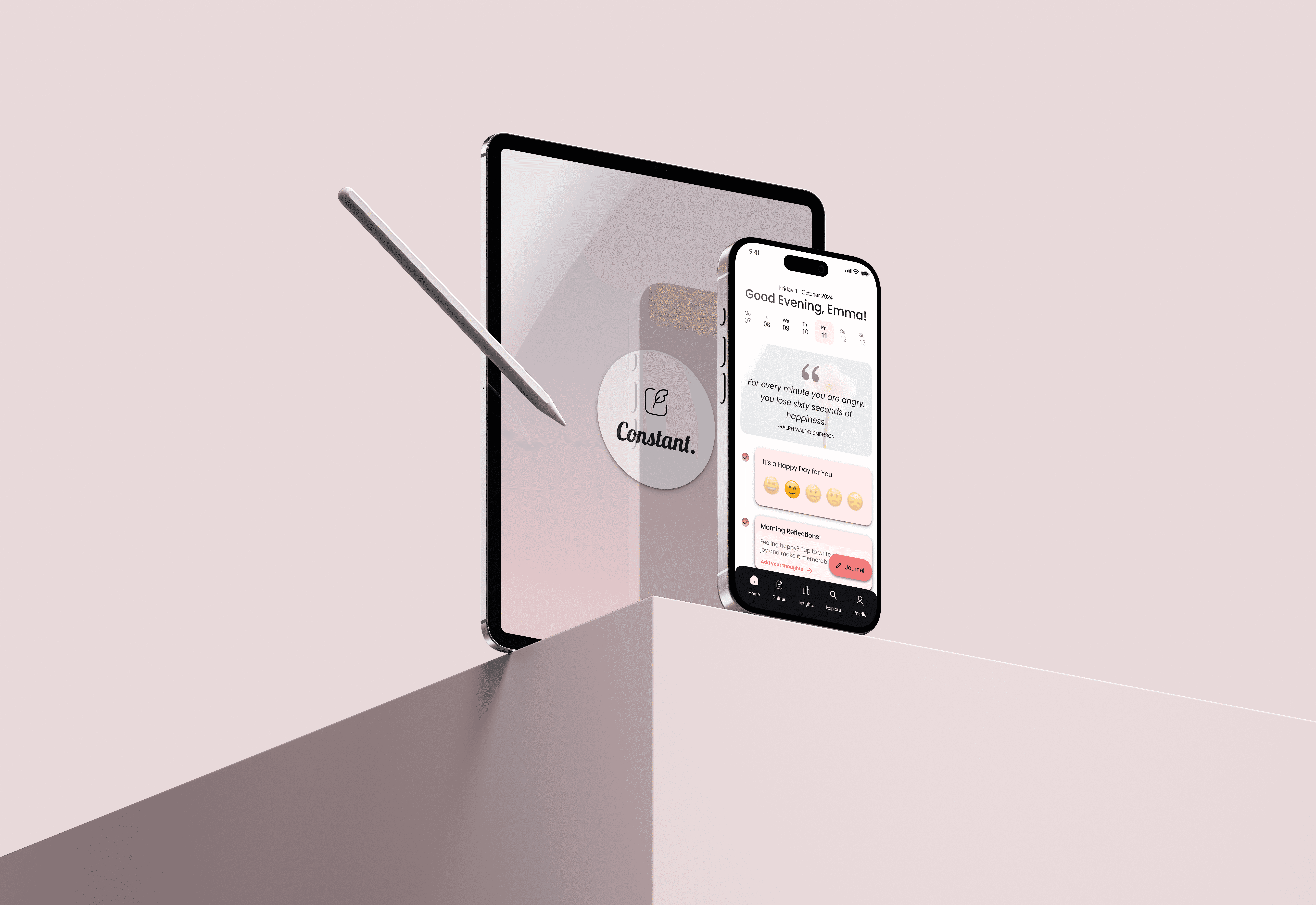
Usher - Using AI to Communicate Design Work
As part of my Usher thesis project, I explored how AI tools can support design communication, not replace design thinking. My goal was to make a complex, research-heavy case study more accessible to hiring managers who may not have time to read every detail.
Why I Used NotebookLM?
Usher involved extensive qualitative research, synthesis, and validation. While the written case study captures depth, I wanted a concise way to communicate the core narrative without losing intent.
I used NotebookLM to:
Condense long-form research into a structured narrative
Maintain story flow while reducing length
Test how AI can support clarity and pacing in portfolio storytelling
My Role vs AI’s Role
The structure, story sequence, and final edits were entirely my decisions.
AI was used as a summarization and drafting tool, similar to how I might use Figma for layout or Miro for synthesis.
Key decisions I controlled:
Narrative order (hook → insight → solution → learning)
What to exclude from the story
Tone and level of detail
Final script length and emphasis
Conclusion
Biggest Learnings:
This experiment reinforced my belief that AI is most effective when used as a supporting tool for communication, not as a substitute for research, judgment, or design intent.
For me, AI fits best as part of the design workflow, not the design itself.
What Worked
Rapid iteration on storytelling length
Easier adaptation for short-form formats
Clearer alignment between research insights and solution narrative
What Didn't Work?
Initial AI-generated outputs were:
Too long
Poorly sequenced
Overly descriptive
This reinforced the importance of strong human direction when using AI tools.

Other Project